Temp-to-Hire Executive vs Fractional Hire: Pros and Cons
Meta Description: Pros and cons of temporary-to-hire versus fractional executive models.
Business owners and leaders face a recurring productivity challenge: how do you fill critical executive roles—fast—without sacrificing long-term success? In the age of AI and rapid digital transformation, hiring the right executive talent can make or break your growth. Two popular approaches are temp to hire executive roles and fractional hiring models. But which is right for your business?
Temp-to-Hire Executive vs Fractional Executive: What’s the Difference?
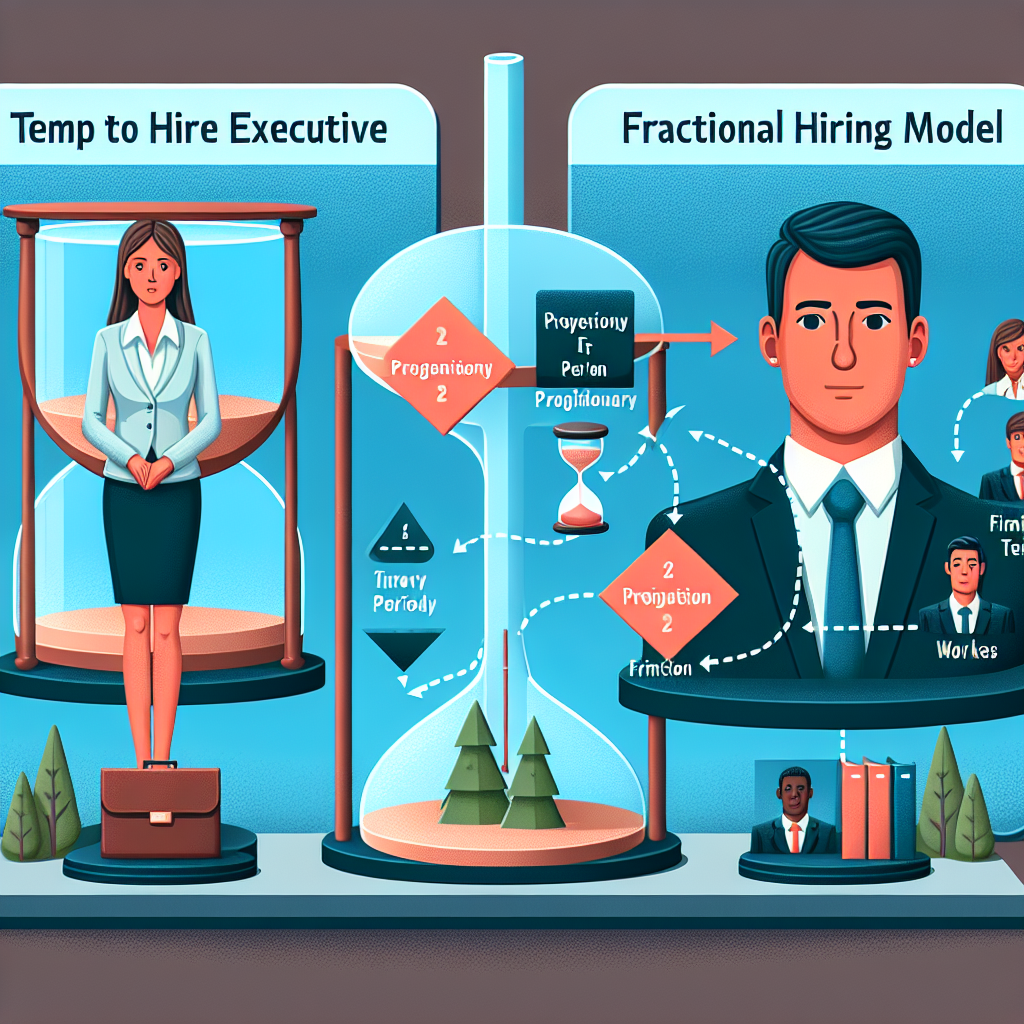
| Model | Description | Ideal For |
|---|---|---|
| Temp-to-Hire Executive | Bring on an executive temporarily with the potential for a permanent offer after a trial period. | Companies seeking a long-term fit but wanting to “test drive” before committing. |
| Fractional Executive | Engage an experienced executive on a part-time, contract, or project basis, often serving multiple clients at once. | Businesses needing specialized leadership or expertise without a full-time hire. |
Image alt text recommendation: Chart comparing temp-to-hire executive and fractional hiring models.
Pros and Cons of Temp-to-Hire Executives
- Pros:
- Allows for hands-on evaluation of skills and cultural fit before a permanent hire.
- Mitigates the risk and cost of a bad executive hire (Harvard Business Review).
- Motivates both parties to deliver value during the trial period.
- Cons:
- May deter top candidates seeking stability.
- Requires onboarding effort for a role that may not be permanent.
- Potential for culture disruption if the fit isn’t right.
Pros and Cons of Fractional Hiring Models
- Pros:
- Access to high-level expertise at a fraction of the cost—ideal for startups and scaling teams.
- Flexible engagement: scale hours up/down as business needs change.
- Fresh perspective from executives working across industries.
- Cons:
- Limited availability—your business may not be their top priority.
- Less embedded in your day-to-day culture and operations.
- Knowledge transfer can be slower if not managed closely.
Framework: Deciding Between Temp-to-Hire and Fractional Executives
- Define the problem: Is your need ongoing or project-based?
- Assess urgency: How quickly do you need impact?
- Cultural integration: Do you want a leader immersed in your company long-term?
- Budget: Can you afford a full-time executive, or does part-time expertise suffice?
For more on modern talent models, see Fractional CMO vs Consultant and our AI Prompt Engineering Solutions page.
FAQ: Temp-to-Hire Executive & Fractional Hiring Models
- What is a temp-to-hire executive?
- A temp-to-hire executive is engaged on a temporary basis with the intention of a permanent role if the fit is right for both parties.
- What are fractional hiring models?
- Fractional hiring models involve hiring part-time executives who serve multiple organizations, offering flexible access to leadership talent.
- When should a business consider a temp-to-hire executive?
- If you’re unsure about long-term fit or want to minimize hiring risk, temp-to-hire is a smart strategy.
- How do fractional executives support productivity?
- They bring specialized skills and fresh insights quickly, often accelerating project delivery and team performance.
- Is one model better for AI or tech-driven businesses?
- Tech and AI startups often benefit from fractional hiring models for rapid growth and agile pivots, but temp-to-hire can work for critical, embedded roles.
- Where can I find vetted executives for these models?
- Explore Your Neo Gig’s Executive Talent Marketplace for trusted, flexible talent solutions.
Ready to Reimagine Executive Hiring?
Choosing between a temp-to-hire executive and a fractional hire depends on your business goals, budget, and growth stage. If you want help navigating modern talent and AI-driven productivity solutions, Your Neo Gig can guide you—no hard sell, just smart strategies for future-ready teams.
Further Reading: How Fractional Executives Are Changing the Business Landscape (Forbes)