Hiring for Marketing vs Hiring for Growth: What’s the Difference?
Meta Description: Understand the difference between branding and revenue roles. Learn how strategic hiring in marketing vs growth can drive your business forward.
Imagine this: You’re building an AI-powered SaaS product, and you’re ready to scale. You need to hire, but the options sound confusing. Do you need a marketing expert to craft your brand voice, or a growth specialist to drive user acquisition? The line between marketing vs growth hiring is often blurry, especially for founders and business owners who want rapid results and sustainable brand equity.
Marketing vs Growth Hiring: Key Differences
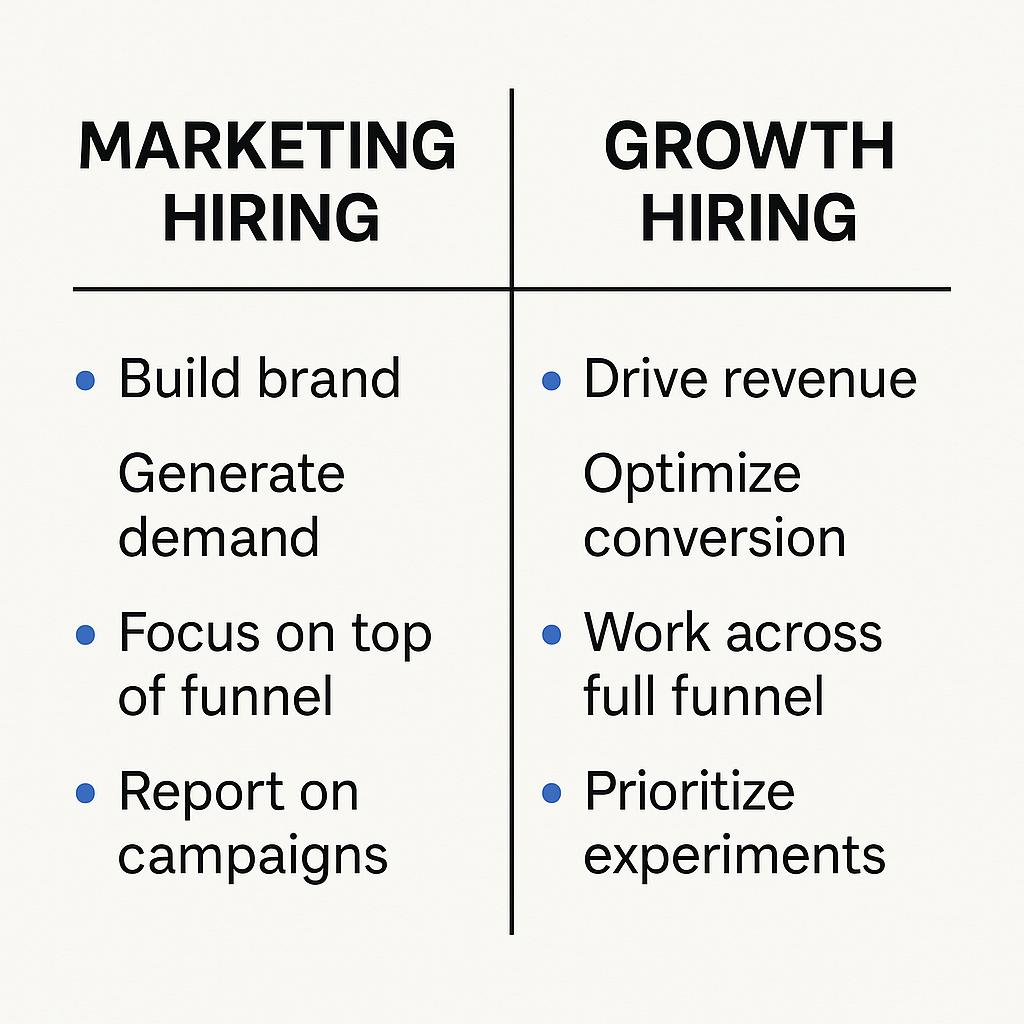
Both marketing and growth teams elevate your business, but their approaches, mindsets, and skillsets differ significantly. Here’s how:
| Aspect | Marketing Hire | Growth Hire |
|---|---|---|
| Main Goal | Build brand awareness & positioning | Drive measurable user or revenue growth |
| Metrics | Brand sentiment, reach, engagement | Signups, conversions, retention, LTV |
| Mindset | Long-term brand building | Experimentation & rapid iteration |
| Common Skills | Storytelling, content, PR, campaigns | Data analysis, funnel optimization, A/B testing |
Why This Matters for AI & SaaS Teams
AI and productivity startups often need both roles—but not always at the same time. Hiring a brand-focused marketer when you need rapid user acquisition can stall momentum. On the flip side, focusing only on growth hacking without a strong brand may limit your long-term positioning and trust.
Actionable Framework: Deciding Who to Hire First
- Product-Market Fit Stage: Lean toward growth hires. Prioritize fast user feedback, analytics, and rapid testing.
- Scaling Stage: Balance both. Build a brand presence while optimizing funnels and retention.
- Established Brand: Invest in marketing hires to deepen customer loyalty and expand reach.
Use prompt engineering to clarify your hiring needs. Try this:
“Act as a hiring strategist. Given my business is at [stage], should I prioritize a marketing or growth hire? What outcomes should I expect in 90 days?”
This approach, paired with insights from our Prompt Engineering Best Practices guide, can help you articulate requirements to both AI tools and human candidates.
Best Practices for Hiring in AI and Productivity Startups
- Define clear, measurable outcomes for each role.
- Look for hybrid candidates at early stages—those who can flex between storytelling and data-driven growth.
- Use prompts to automate candidate screening and job description generation (see our AI Productivity Resources).
- Iterate on your team structure as your business evolves.
For more on the difference between marketing and growth, check out this in-depth guide from HubSpot.
FAQs: Marketing vs Growth Hiring
What is the main difference between a marketing hire and a growth hire?
A marketing hire focuses on brand, positioning, and long-term awareness. A growth hire zeroes in on measurable user or revenue growth, often through rapid experimentation and data analysis.
When should I hire for growth over marketing?
If your startup is pre-product-market fit or needs user traction fast, prioritize growth roles. Once you have traction, balance with marketing hires to solidify your brand.
Can one person handle both marketing and growth?
Early-stage teams often need hybrid talent. However, as you scale, specialization becomes crucial for sustained success.
What are the risks of hiring only for growth?
Over-indexing on growth without brand investment can lead to short-lived spikes and weak customer loyalty. A strong brand supports sustainable growth.
How can prompt engineering help with hiring?
Prompt engineering enables you to clarify requirements, automate screening, and generate targeted job descriptions, making your hiring process faster and smarter.
Next Steps
Ready to clarify your team’s next hire? Explore more actionable frameworks and AI-powered hiring tools from Your Neo Gig. Whether you’re scaling your SaaS or optimizing productivity, we’re here to help you make smarter decisions—faster.