
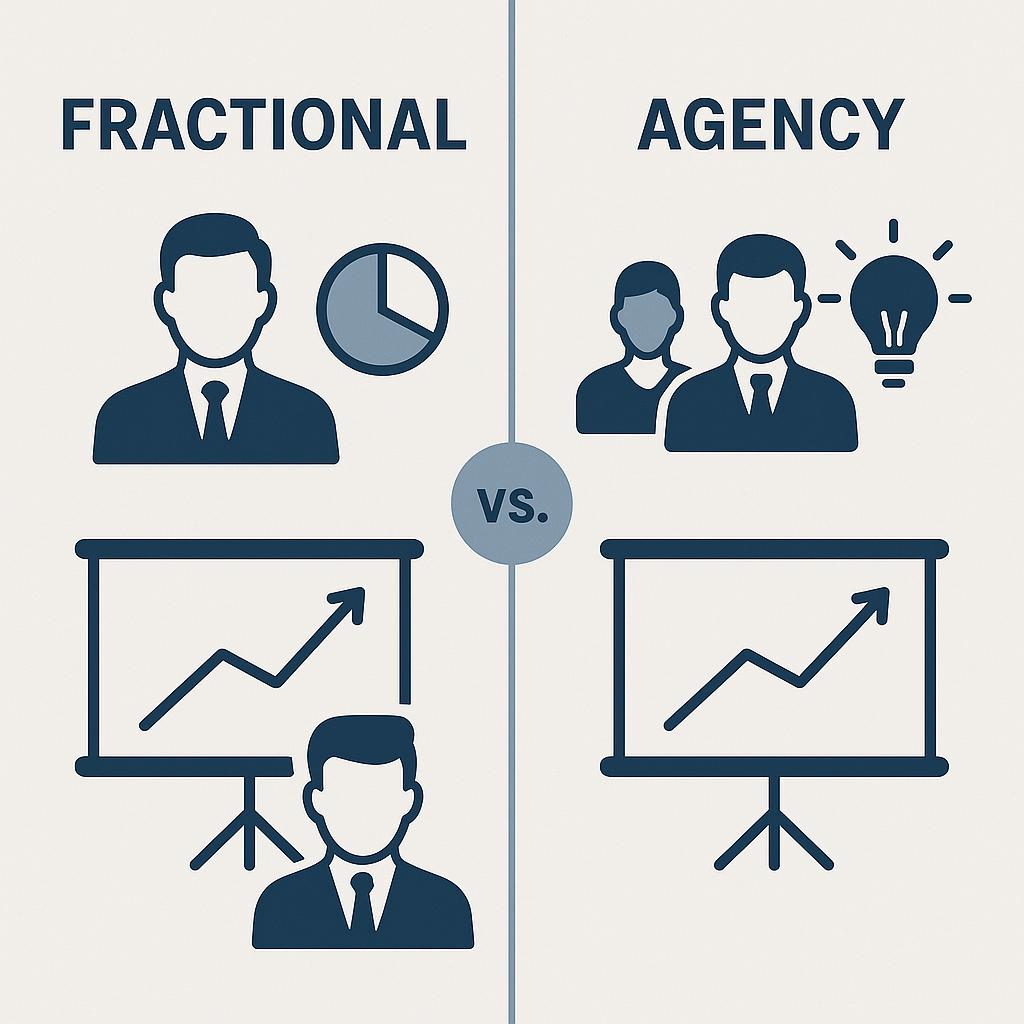
Why Fractional Executives Outperform Agencies in Strategy
In the age of AI and relentless digital transformation, business leaders face a familiar dilemma: do you trust an external agency with your strategy, or bring in a fractional executive? If your team is struggling with vague deliverables, slow execution, or generic recommendations, you’re not alone. Today’s productivity challenge isn’t just about working harder—it’s about working smarter, with the right operators guiding your strategic direction.
Fractional vs Agency: Key Differences in Business Strategy
Both options promise expertise, but their approaches and impact are fundamentally different. Understanding the nuances of fractional vs agency models can help you unlock better business outcomes—especially in high-velocity fields like AI, productivity, and prompt engineering.
| Fractional Executive | Agency |
|---|---|
| Embedded in your team | External partner |
| Hands-on, operator mindset | Consultative, project-based |
| Custom, iterative strategy | Predefined frameworks |
| Faster feedback loops | Slower, often indirect feedback |
Why Fractional Executives Win on Execution
- Operator’s Edge: Fractional executives act as true team members—rolling up their sleeves to implement strategy, not just advise.
- Real-Time Adaptation: As business conditions and AI tools evolve, fractional leaders quickly adjust prompts, workflows, and priorities.
- Deep Context: By immersing in your business and tech stack, they surface opportunities that agencies might miss.
- Strategic Prompt Engineering: Fractional leaders often bring advanced prompt frameworks, helping teams get more value from AI tools faster.
Actionable Framework: Getting More from Fractional Talent
- Define Outcomes: Start with specific, measurable goals—e.g., “Reduce manual reporting time by 40% using AI-powered prompts.”
- Prioritize Integration: Treat your fractional executive like a core team member. Give them access to real-time data, tools, and meetings.
- Leverage Prompt Frameworks: Use prompt templates and best practices to accelerate results—see our AI Prompt Templates for inspiration.
- Iterate Quickly: Set up weekly check-ins and feedback loops. Fractional leaders thrive on rapid iteration.
FAQ: Fractional Executives vs Agencies in Strategy
What is the main difference between a fractional executive and an agency?
A fractional executive is an experienced operator who joins your team part-time, often leading strategy and execution. An agency is an external service provider, usually focused on projects or campaigns rather than embedded leadership.
How do fractional executives improve business strategy for AI and productivity?
Fractional leaders bring hands-on expertise, advanced prompt engineering skills, and adapt quickly as your business or technology needs shift. This leads to faster, more tailored strategic outcomes.
Are fractional executives more cost-effective than agencies?
Frequently, yes. You get senior-level impact without the overhead of a full-time hire or agency retainer, plus deeper integration and accountability.
Can fractional executives work alongside agencies?
Absolutely. Many organizations use a hybrid approach, with fractional leaders orchestrating agency deliverables and ensuring alignment with business goals.
Where can I learn more about effective prompt engineering for business strategy?
Visit our Prompt Engineering hub or explore resources from leaders like Harvard Business Review for best practices.
Unlock Strategic Advantage with Your Neo Gig
If you’re rethinking the fractional vs agency model for your business strategy, consider how embedded operators can help you move faster and smarter. Explore how Your Neo Gig connects you with top-tier fractional talent and prompt engineering resources—no hard sell, just practical support for your next growth chapter.