How Fractional Leaders Fix Operational Bottlenecks
Meta Description: Remove inefficiencies slowing growth. Discover how fractional leaders and prompt engineering can eliminate operations bottlenecks for better productivity.
Ever feel like your business is stuck in slow motion—waiting on approvals, chasing status updates, or wrestling with unclear processes? You’re not alone. In the age of AI and rapid digital transformation, even agile teams can hit operations bottlenecks that slow growth and innovation. Fortunately, fractional leaders, especially a fractional COO, have emerged as a powerful solution, combining strategic know-how with prompt-driven productivity tools to keep your team moving forward.
What Are Operational Bottlenecks?
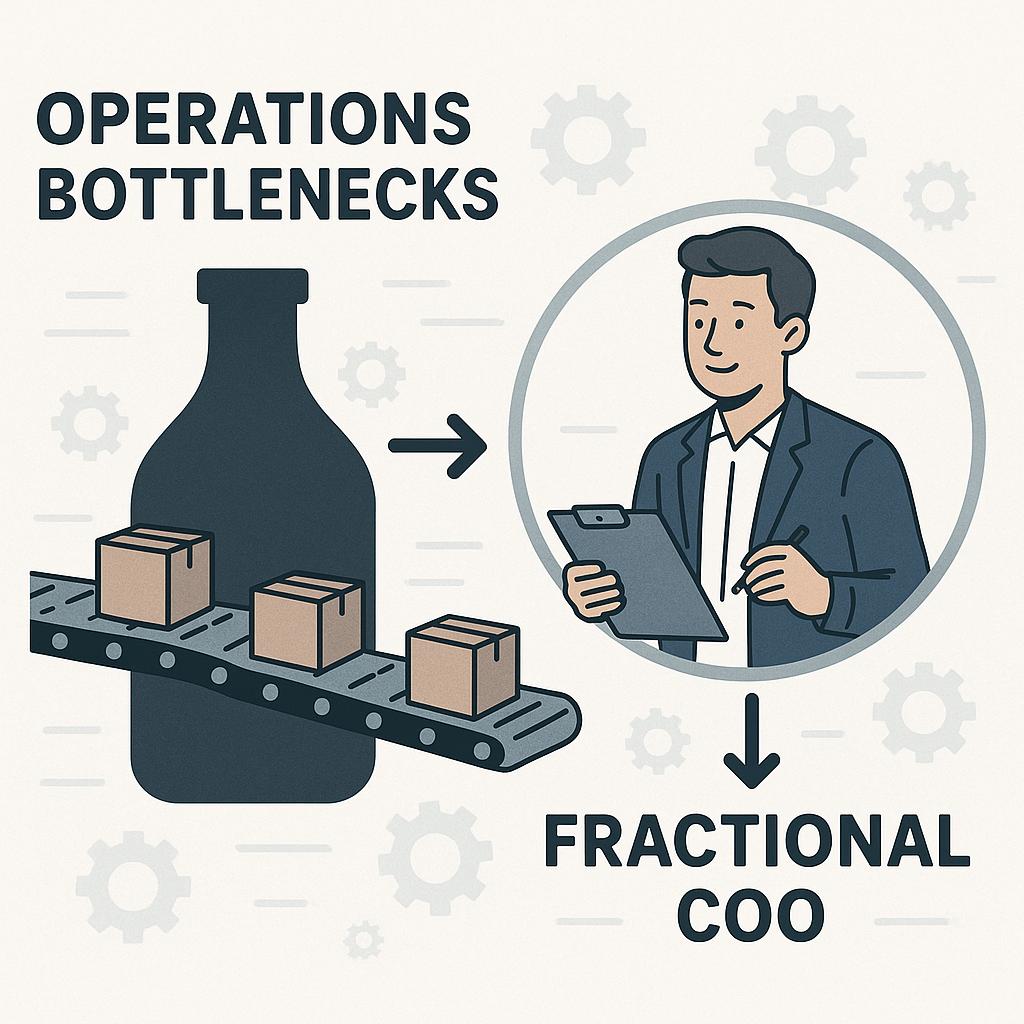
Operations bottlenecks are points in your workflow where tasks pile up, causing delays, miscommunication, or lost revenue. Common culprits include:
- Manual data entry or reporting
- Approval processes that depend on one person
- Poorly documented handoffs between teams
- Under-utilized AI and automation tools
Left unchecked, these bottlenecks erode morale and undermine your competitive edge.
How Fractional COOs Break Through Bottlenecks
A fractional COO brings executive-level operations expertise—without the cost of a full-time hire. Here’s their playbook:
- Diagnose with Data: Fractional leaders map out workflows and use analytics to pinpoint inefficiencies.
- Prompt Engineering: Using AI prompts, they automate repetitive tasks and streamline communication. For example, setting up custom GPT prompts to summarize daily reports, route support tickets, or generate SOPs.
- Cross-Team Alignment: They facilitate collaboration between marketing, sales, and product—often with prompt-driven dashboards or reporting tools.
- Iterative Improvement: Fractional COOs set up continuous feedback loops, using AI tools to collect team input and surface new bottlenecks.
For a deeper dive on workflow optimization and AI, check out our AI productivity frameworks guide.
Prompt Engineering Tips for Faster Operations
- Define clear objectives for each prompt—avoid vague questions to save time and boost accuracy.
- Template prompts for recurring tasks (e.g., project updates, meeting insights).
- Use prompt chaining: Connect outputs from one prompt as inputs to the next, creating seamless workflows.
- Test and refine prompts regularly—ask your team what’s working and where friction remains.
Learn how prompt engineering can level-up your team on our Prompt Engineering resource page.
FAQ: Fixing Operations Bottlenecks with Fractional Leaders
- What does a fractional COO do differently than a full-time COO?
- Fractional COOs focus on high-impact projects and rapid transformation, leveraging AI and process automation without getting bogged down in day-to-day management.
- How can prompt engineering improve operations?
- By designing precise AI prompts, leaders automate routine workflows, reduce errors, and free up team capacity for strategic work.
- What are signs my business has operations bottlenecks?
- Look for recurring delays, frequent status requests, repeated mistakes, or over-reliance on a single person for approvals.
- Can fractional leaders work with remote or hybrid teams?
- Absolutely. They often specialize in aligning distributed teams using collaborative tools and prompt-driven automation.
- How quickly can a fractional COO deliver results?
- Many see workflow improvements within the first 30-60 days, with ongoing gains as processes are refined and automated.
Ready to Remove Your Operations Bottlenecks?
Fractional leaders and strategic prompt engineering can unlock new levels of productivity for your business. Explore more ways to streamline your operations and leverage AI with Your Neo Gig’s services—and start building your competitive edge today.