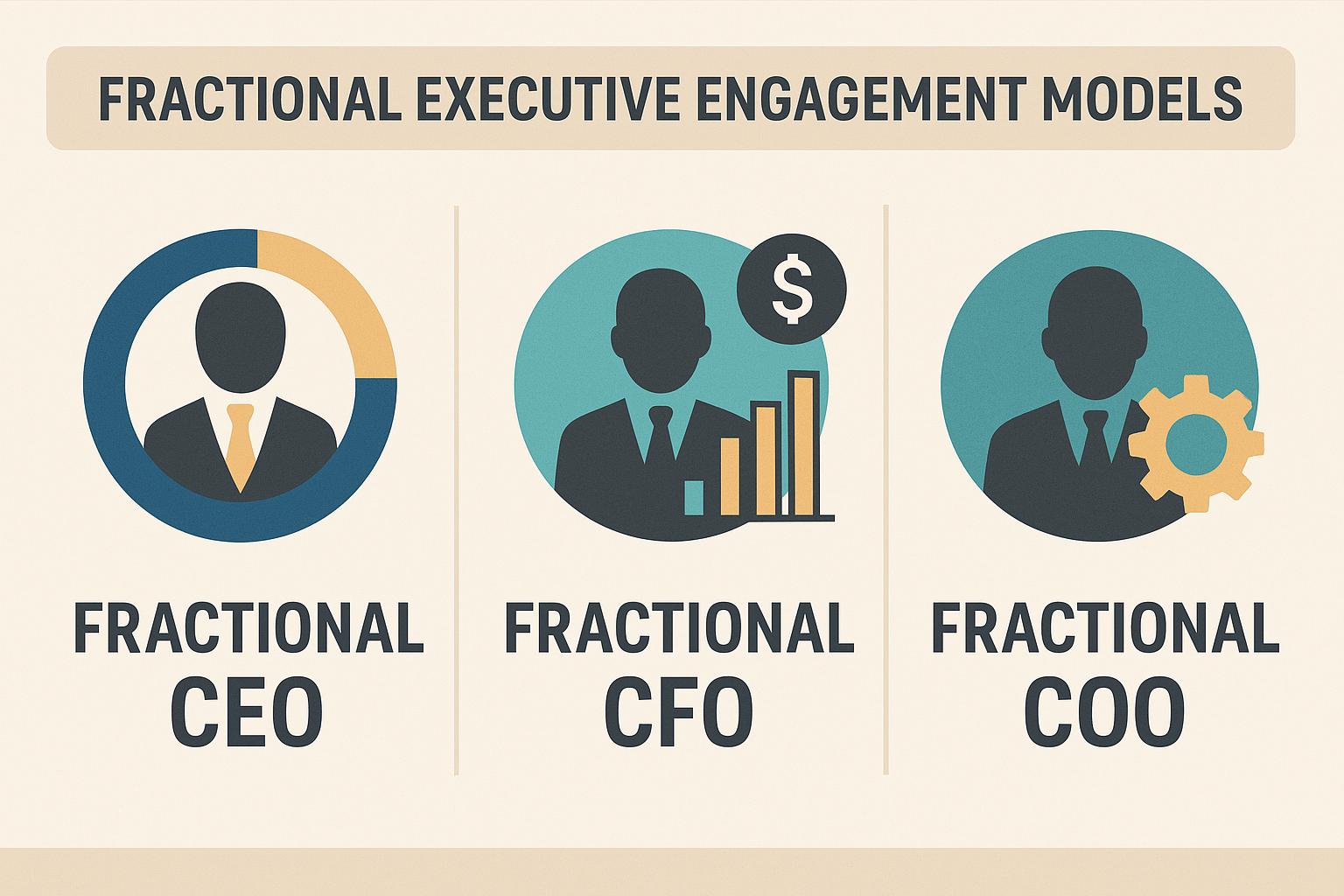
6 Fractional Executive Engagement Models Compared
Hiring the right executive talent is critical for growth—but bringing on a full-time leader can be costly, slow, and risky for many small and midsize businesses (SMBs). As fractional executive engagement models become more popular, founders, operators, and HR leaders need clarity on which approach fits their needs best. This guide breaks down six proven fractional executive models so you can make smart, scalable hiring decisions.
Why Consider Fractional Executive Engagement?
Fractional executives—CFOs, CMOs, CROs, and more—offer deep leadership expertise, flexible commitment, and cost efficiency. Compared to full-time hires, fractional leaders help SMBs:
- Access top-tier talent without a long-term contract
- Scale leadership up or down as business needs evolve
- Accelerate strategic projects without overextending payroll
But not all fractional executive engagement models are created equal. Choosing the right model can determine your ROI and success.
Comparing the Top 6 Fractional Executive Engagement Models
| Model | Best For | Pros | Cons |
|---|---|---|---|
| 1. Retainer-Based | Ongoing strategic support |
|
|
| 2. Hourly or Day Rate | Short-term or ad hoc needs |
|
|
| 3. Project-Based | Defined deliverables (e.g., fundraising, market entry) |
|
|
| 4. Interim Leadership | Bridging gaps during transitions |
|
|
| 5. Advisory or Board Role | Strategic guidance, networking |
|
|
| 6. Hybrid Model | Combining models for custom fit |
|
|
Framework: How to Choose and Manage Fractional Executive Engagements
- Assess your needs: Is the challenge ongoing, project-based, or interim? Do you need strategy, execution, or both?
- Vet candidates: Prioritize proven industry fit, references, and measurable outcomes. See our Fractional Leadership Hiring Guide for practical vetting checklists.
- Set clear expectations: Define deliverables, communication cadence, and decision rights up front.
- Onboard effectively: Provide access, context, and introduce the executive to key stakeholders. Review our Onboarding Fractional Executives Framework for step-by-step tips.
- Review performance: Schedule regular check-ins and adjust the engagement model as needs shift.
Frequently Asked Questions About Fractional Executive Engagement Models
What is a fractional executive engagement model?
A fractional executive engagement model defines the structure, scope, and compensation for hiring senior leaders on a part-time or project basis, rather than full-time. Common models include retainer, hourly, project-based, and interim assignments.
When should a business hire a fractional executive instead of a full-time leader?
Fractional executives are best when you need high-level expertise but don’t have the budget or need for a full-time headcount. This is common during growth spurts, leadership gaps, or for launching new initiatives. Harvard Business Review supports this trend among modern SMBs.
How do you ensure a successful fractional executive engagement?
Success relies on clear scoping, transparent communication, and regular performance reviews. Use frameworks and onboarding best practices to align your team and maximize impact.
Are fractional executive models cost-effective?
Yes—fractional models can save up to 60% compared to full-time salaries, especially when leadership needs fluctuate. For data, see CFODive’s analysis on the cost-effectiveness of fractional CFOs.
Can I combine different engagement models?
Absolutely. Many SMBs blend retainer and project-based work, or move from hourly to retainer as needs evolve. The hybrid approach offers both flexibility and continuity.
Explore Flexible Fractional Executive Talent
Navigating fractional executive engagement models doesn’t have to be complicated. At Your Neo Gig, we help SMBs design and manage the right leadership solutions for every stage of growth. Explore our curated network and practical frameworks to confidently scale your business with fractional talent—on your terms.