
Introduction: The Financial Leadership Dilemma
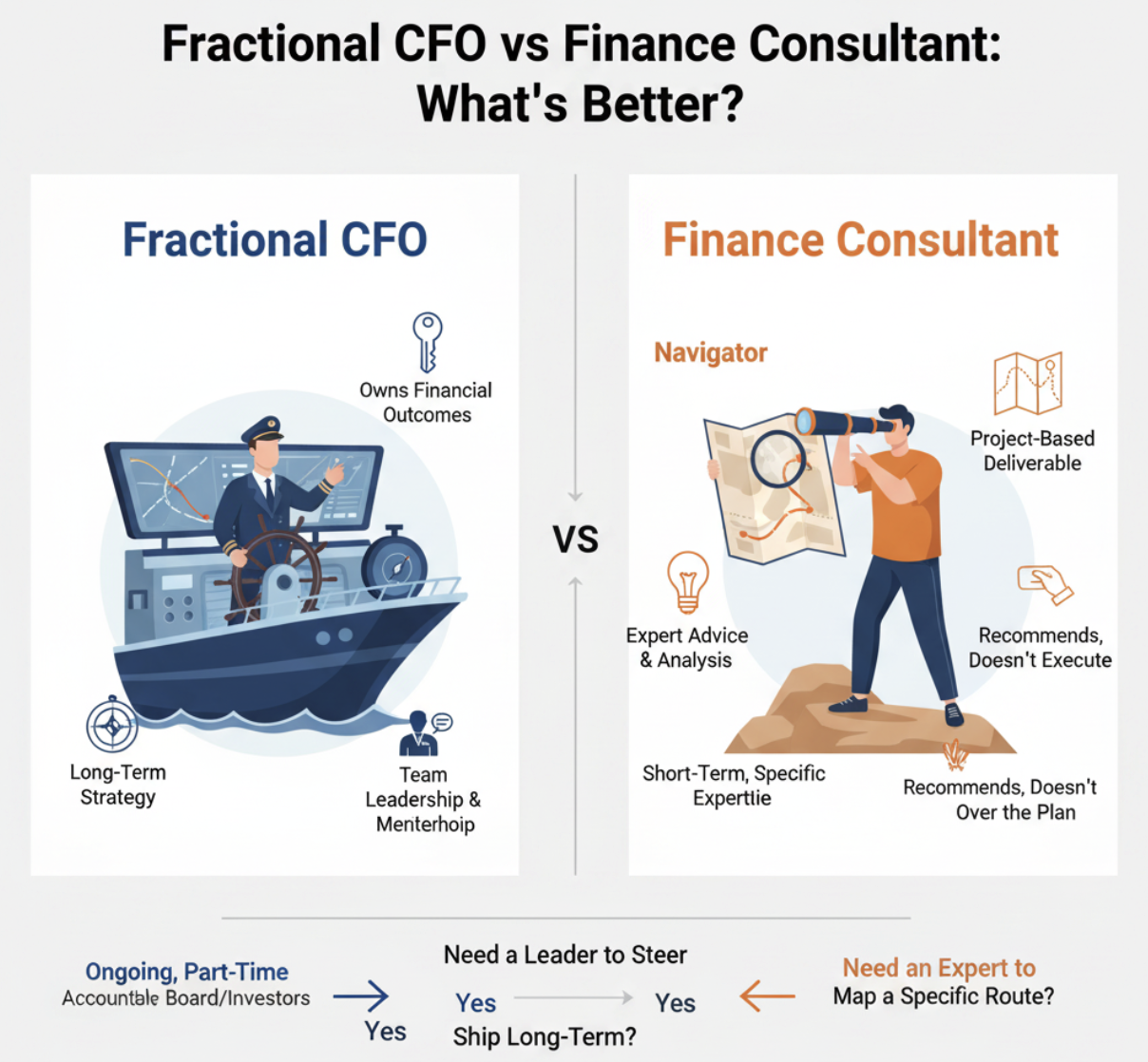
If you’re running a growing business, financial leadership is not optional — it’s mission-critical. But when budgets are tight, and your company is still scaling, should you hire a fractional CFO or bring in a finance consultant? Both can help, but the depth, scope, and long-term impact of each role differ significantly. Making the wrong choice could mean stalled fundraising, missed forecasts, or even investor concerns.
At NeoGig, we’ve seen firsthand how startups and mid-sized businesses wrestle with this decision. Let’s break down fractional CFO vs finance consultant so you can confidently choose the right solution.
What is a Fractional CFO?
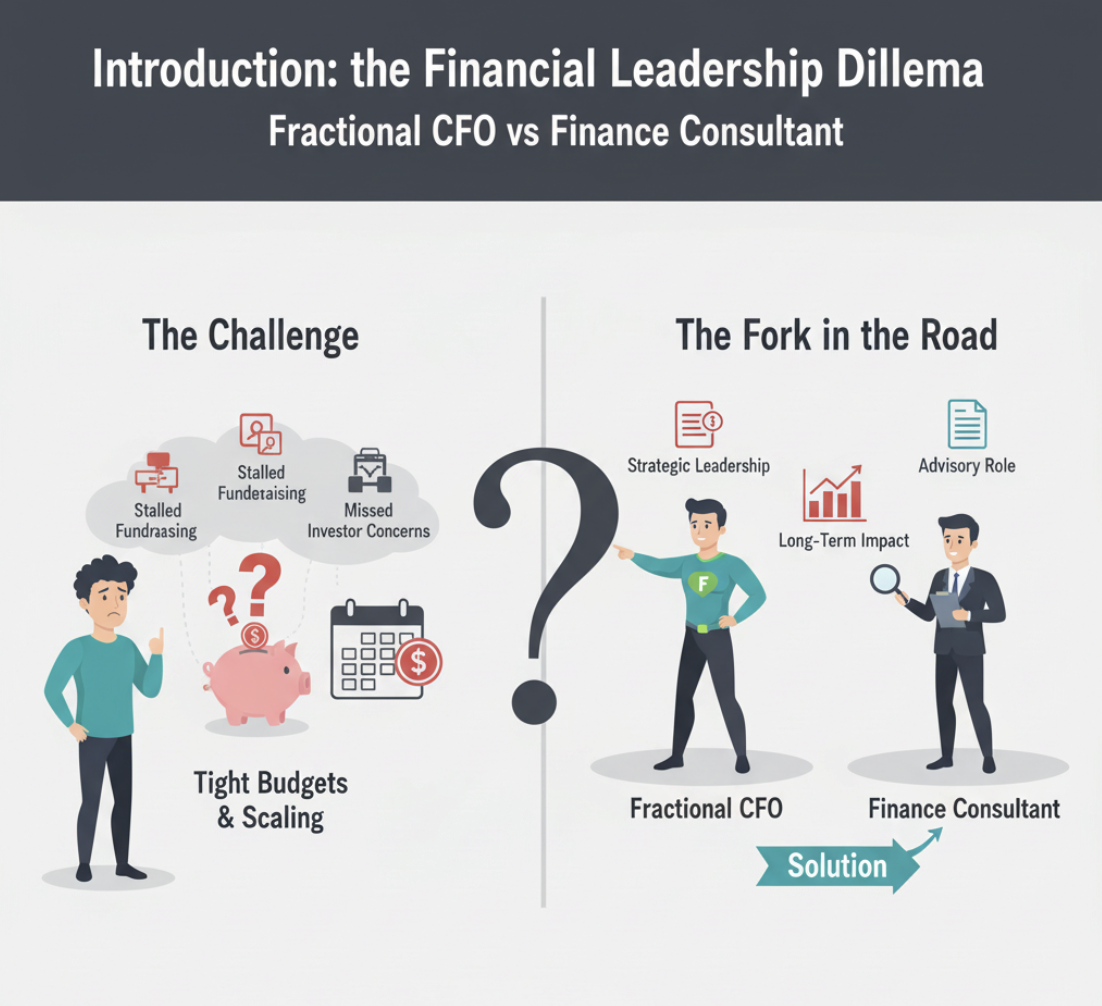
A fractional CFO is a senior executive who works part-time or on-demand, bringing leadership and accountability to your financial function without the full-time cost.
Core Responsibilities of a Fractional CFO:
- Financial forecasting and cash flow modeling
- Fundraising support (pitch decks, investor negotiations, term sheets)
- Strategic board reporting
- Cost optimization and capital allocation
- Building and mentoring finance teams
- Aligning financial strategy with company growth goals
💡 Pro Tip: Use AI-powered tools to streamline financial reporting. For example, with structured AI prompts, fractional CFOs can generate faster scenario analyses and investor-ready dashboards. EJ Bowen’s Prompt Library is a great starting point for finance teams adopting AI.

What is a Finance Consultant?
A finance consultant typically provides specialized, project-based advice. Unlike a fractional CFO, consultants are not embedded in day-to-day leadership or accountable for long-term results.
Typical Work of a Finance Consultant:
- Designing a financial model for a new product
- Conducting due diligence for acquisitions
- Benchmarking industry KPIs
- Offering recommendations on tax strategy or compliance
Consultants are excellent for short-term expertise, but they usually hand off the deliverable and exit. There’s little ongoing accountability once the project ends.
Fractional CFO vs Finance Consultant: Key Differences
| Factor | Fractional CFO | Finance Consultant |
|---|---|---|
| Scope | Broad, ongoing leadership | Narrow, project-specific |
| Accountability | Responsible for outcomes (board, investors) | Provides advice, not execution |
| Engagement | Long-term, part-time | Short-term, contract-based |
| Team Impact | Builds and mentors teams | Minimal team involvement |
| Best Use Case | Scaling, fundraising, strategic growth | Targeted projects, analysis |
📊 Visual Aid: [Fractional CFO vs Finance Consultant comparison chart — alt text: “fractional CFO vs finance consultant responsibilities comparison table”]
When Should You Hire a Fractional CFO?
Hire a fractional CFO if:
- You’re preparing for fundraising and need investor-ready reporting.
- You struggle with cash flow management.
- The board is asking for strategic insights beyond accounting.
- You want to align finance with long-term growth plans.
When Should You Hire a Finance Consultant?
Hire a finance consultant if:
- You need help with a specific financial model or analysis.
- You’re evaluating an acquisition or investment.
- You need a one-time audit or compliance review.
AI Workflows to Supercharge Both Roles
Whether you hire a fractional CFO or finance consultant, AI can streamline the work:
- Automated Forecasting: Use tools like ChatGPT with structured prompts to simulate multiple growth scenarios.
- Board Reporting: Generate executive summaries quickly with AI-powered report builders.
- Due Diligence Checklists: Access structured workflows like the AI Due Diligence Checklist to speed up complex reviews.
By combining executive expertise with AI workflows, companies save 20–40% of time on financial reporting and strategic analysis.
FAQs: Fractional CFO vs Finance Consultant
1. What’s the main difference between a fractional CFO and finance consultant?
A fractional CFO provides ongoing leadership and accountability, while a finance consultant delivers short-term, specialized advice.
2. How much does a fractional CFO cost compared to a finance consultant?
Fractional CFOs typically charge $200–350/hr or $8k–20k/month, while consultants often bill per project or hourly without ongoing commitments.
3. Can startups benefit from a fractional CFO?
Absolutely — especially those preparing for Series A/B fundraising or scaling operations where investor trust is critical.
4. Do fractional CFOs also handle compliance and bookkeeping?
Not directly. They oversee teams or vendors managing compliance but focus on strategy, reporting, and investor alignment.
5. Can AI replace fractional CFOs or consultants?
AI is a powerful support tool, but strategic judgment, leadership, and investor communication remain human-driven.
Conclusion: Which Role is Right for You?
If you need strategic financial leadership, a fractional CFO is the better choice. If you need project-based expertise, go with a finance consultant. In many cases, businesses start with a consultant and transition to a fractional CFO as they scale.
👉 Ready to bring financial clarity to your business? Explore how NeoGig can connect you with the right fractional executive talent to drive growth. Learn more at NeoGig.