
Introduction: The Hidden Challenge of M&A
Mergers and acquisitions (M&A) can feel like juggling on a tightrope. You’re balancing due diligence, culture clashes, integration of systems, and the high stakes of business transformation. For many companies, especially mid-sized or scaling organizations, the challenge isn’t finding the deal—it’s executing it smoothly. That’s where the idea of a fractional COO for M&A comes in.
Instead of hiring a full-time executive you may not need long-term, a fractional COO brings senior-level operational leadership precisely when you need it most: during integration and transition. Let’s unpack how this works and why it may be your smartest move during M&A.
What Is a Fractional COO in M&A?
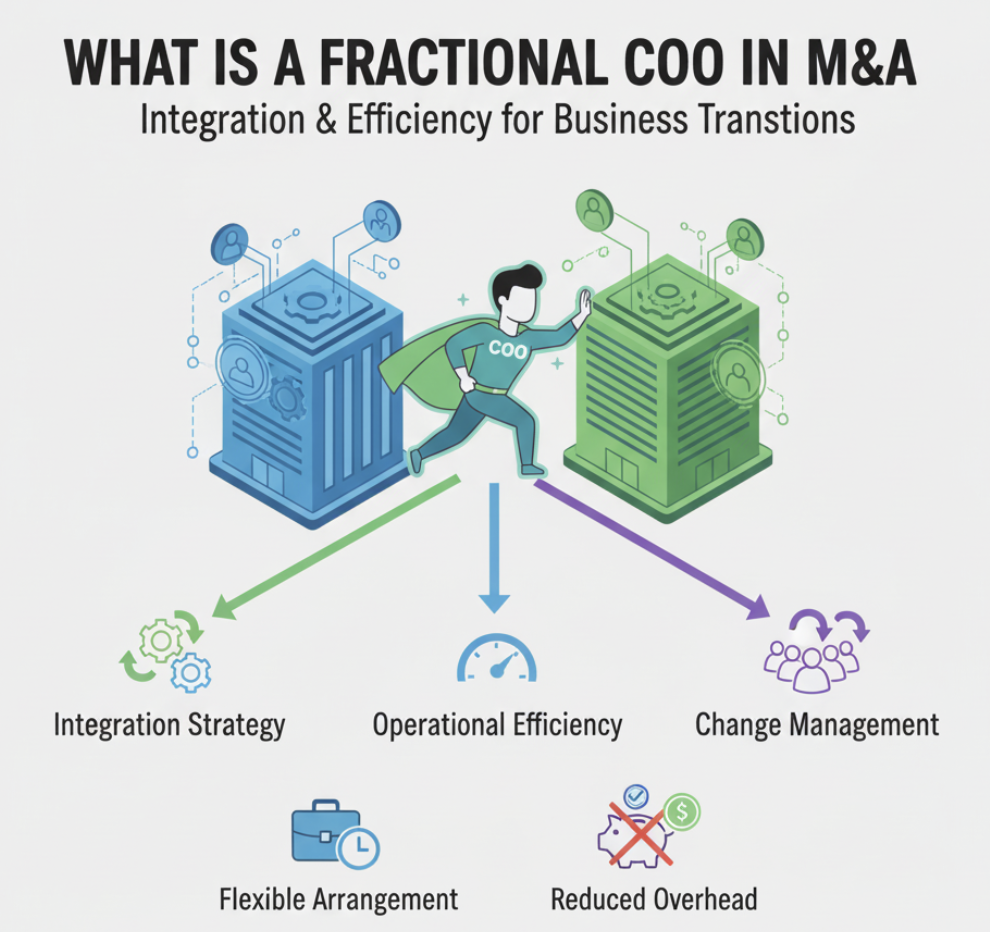
A fractional COO (Chief Operating Officer) is an experienced operations leader engaged on a part-time or project basis. In the context of M&A, they provide leadership for:
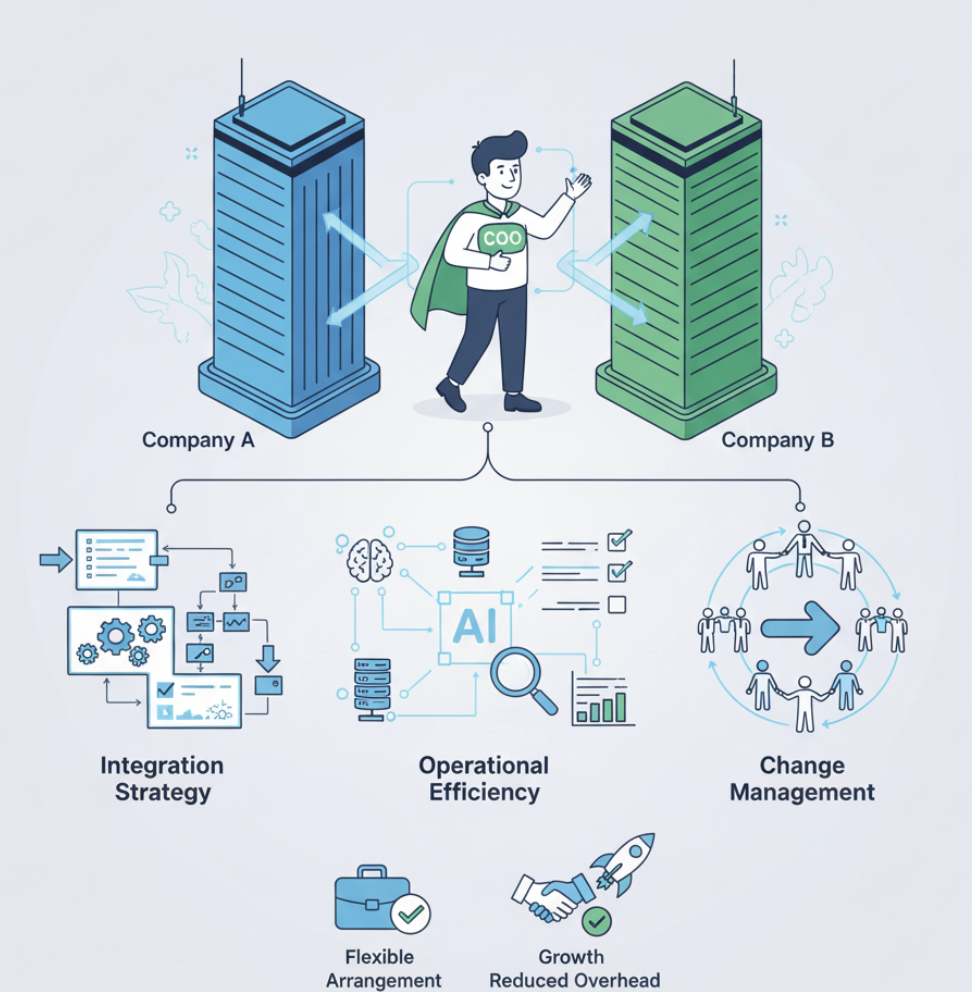
- Integration strategy – aligning processes, systems, and cultures
- Operational efficiency – reducing redundancies and optimizing workflows
- Change management – guiding teams through disruption with clarity and focus
This flexible arrangement means you get executive-level leadership without the long-term overhead of a permanent hire.
Why a Fractional COO Can Be a Game-Changer During M&A
1. Expert Integration Guidance
A fractional COO has “been there, done that” across multiple organizations. They know the pitfalls—from mismatched tech stacks to clashing leadership styles—and can set up frameworks for smoother integration.
2. Operational Efficiency Under Pressure
During M&A, inefficiency is costly. A fractional COO can:
- Identify redundant roles and processes
- Standardize workflows quickly
- Leverage AI-driven tools (like prompt libraries) to accelerate decision-making
3. Change Management & Culture Alignment
Resistance to change is one of the biggest risks in any merger. A fractional COO acts as a steady, neutral guide to:
- Communicate the vision clearly
- Ensure both teams feel heard
- Establish shared accountability frameworks
4. Cost-Effective Leadership
Hiring a full-time COO during M&A can be expensive and unnecessary. Fractional arrangements allow you to scale leadership capacity as needed, without long-term commitments.
How AI Can Supercharge the Fractional COO’s Role
Today’s most effective fractional COOs don’t just rely on experience—they leverage AI workflows to enhance integration speed and accuracy. For example:
- AI-Powered Due Diligence: Using tools like the Due Diligence Checklist to streamline financial and operational reviews.
- Prompt Engineering for Communication: Fractional COOs can utilize prompt engineering to draft clear integration playbooks, FAQs, and cultural alignment strategies.
- Playbooks & Checklists: Accessing resources like the 90-Day Success Checklist ensures post-merger momentum isn’t lost.
By pairing human leadership with AI-enhanced tools, companies create a multiplier effect for success.
Actionable Framework: When to Use a Fractional COO in M&A
You should consider engaging a fractional COO if:
- Your company lacks in-house M&A integration experience
- Operational inefficiencies could threaten deal value
- Cultural integration is a top concern
- You want to avoid the cost of a full-time executive
- You need both strategy and execution, not just advice
Quick Checklist:
- Do we have a clear integration roadmap?
- Are we confident in change management leadership?
- Do we need temporary but high-level expertise?
- Are we leveraging AI workflows to save time and cost?
If any of these are “no,” a fractional COO may be your missing piece.
FAQ: Fractional COO & M&A
Q1: What’s the difference between a fractional COO and a full-time COO during M&A?
A full-time COO is a permanent role with ongoing responsibilities, while a fractional COO is engaged part-time or project-based—ideal for time-limited events like M&A.
Q2: How long should a fractional COO stay after an acquisition?
Typically 3–12 months, depending on integration complexity. They can stay longer if needed for stabilization.
Q3: Can a fractional COO work with private equity or venture-backed firms?
Absolutely. In fact, many PEs and VCs rely on fractional executives for rapid deployment during portfolio transitions.
Q4: What industries benefit most from a fractional COO during M&A?
Technology, SaaS, healthcare, and finance often leverage fractional COOs, but the model applies across industries where integration is complex.
Q5: Does using AI really make a difference in M&A integration?
Yes. AI tools—from business acquisition certifications to playbooks—help fractional COOs save time, reduce errors, and enhance communication.
Conclusion: A Strategic Partner for M&A Success
M&A is too important to risk on trial-and-error leadership. A fractional COO in M&A brings the expertise, efficiency, and change management needed to ensure deals don’t just close—but thrive. Pairing this expertise with AI-powered frameworks and resources ensures your business doesn’t just survive integration, but comes out stronger.
👉 If you’re exploring M&A, consider how NeoGig’s fractional executive talent can help you navigate complexity with confidence.