
Introduction: The Financial Leadership Dilemma
Every growing business eventually faces a critical moment: the numbers become too complex to manage without a dedicated financial leader. Cash flow forecasts, investor reporting, compliance, and strategic planning demand more than what a controller or accountant can handle. But hiring a full-time Chief Financial Officer (CFO) can feel overwhelming—especially for companies that aren’t ready for the long-term expense.
That’s when two powerful options come into play: fractional CFOs and interim CFOs. Both provide high-level expertise, but in very different ways. Understanding the differences between fractional CFO vs interim CFO is the first step in choosing the right fit for your company’s stage of growth.
What Is a Fractional CFO?
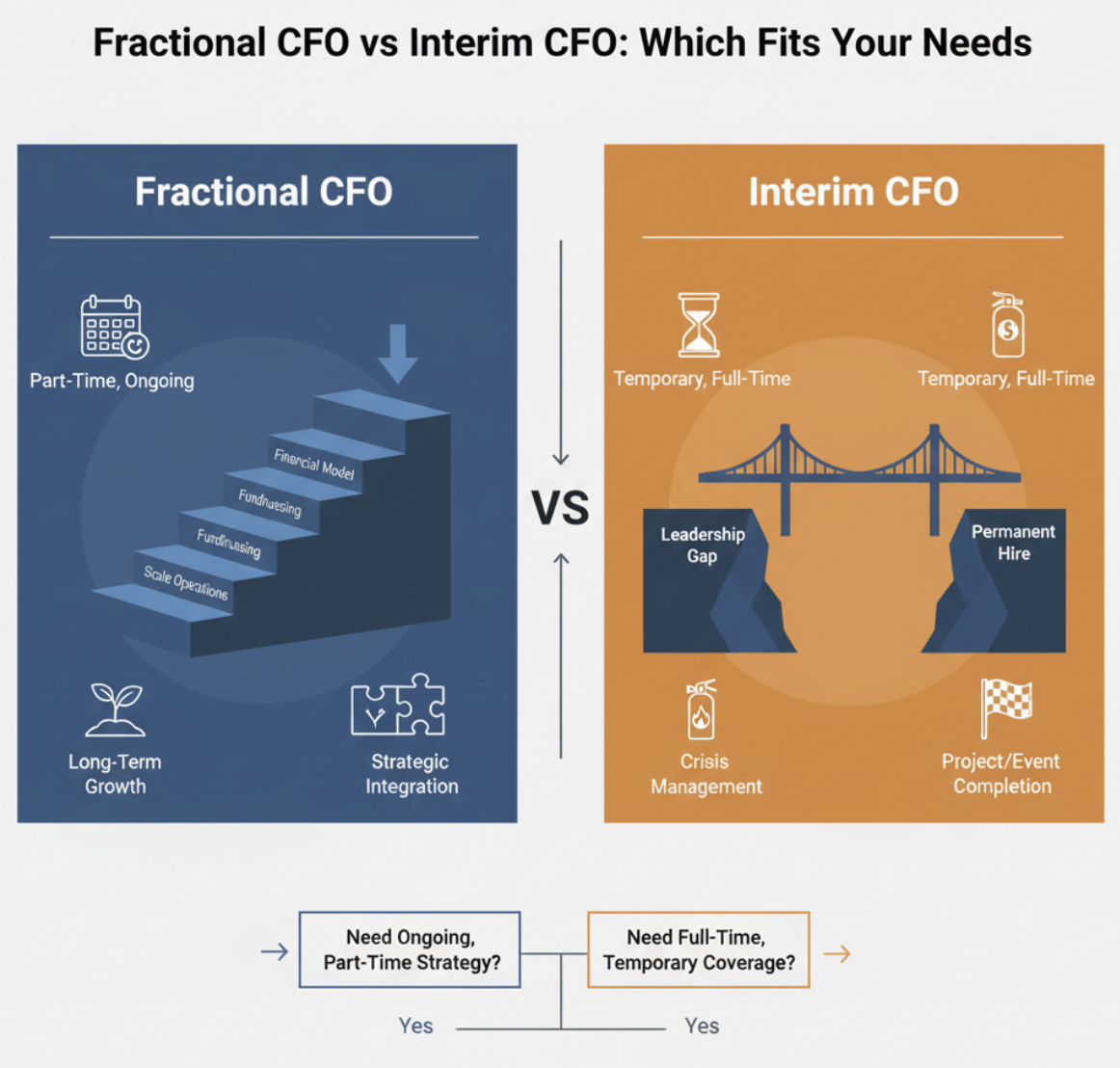
A fractional CFO is a seasoned finance executive who works with your business part-time, often on a long-term basis. They might spend a few hours each week or several days per month with your team. This approach is ideal for businesses that need ongoing financial guidance but don’t require (or can’t justify) a full-time executive.
Key Benefits of a Fractional CFO
- Cost-effective: Pay only for the time you need.
- Scalable support: Increase hours as your company grows.
- Long-term alignment: Develops deep familiarity with your business over time.
- Strategic expertise: Helps with fundraising, financial modeling, and scaling operations.
Fractional CFOs are especially popular with startups and mid-market companies looking to professionalize financial operations without the high overhead of a permanent hire. NeoGig’s fractional executive hiring solutions make it easier to access this kind of flexible leadership.
What Is an Interim CFO?
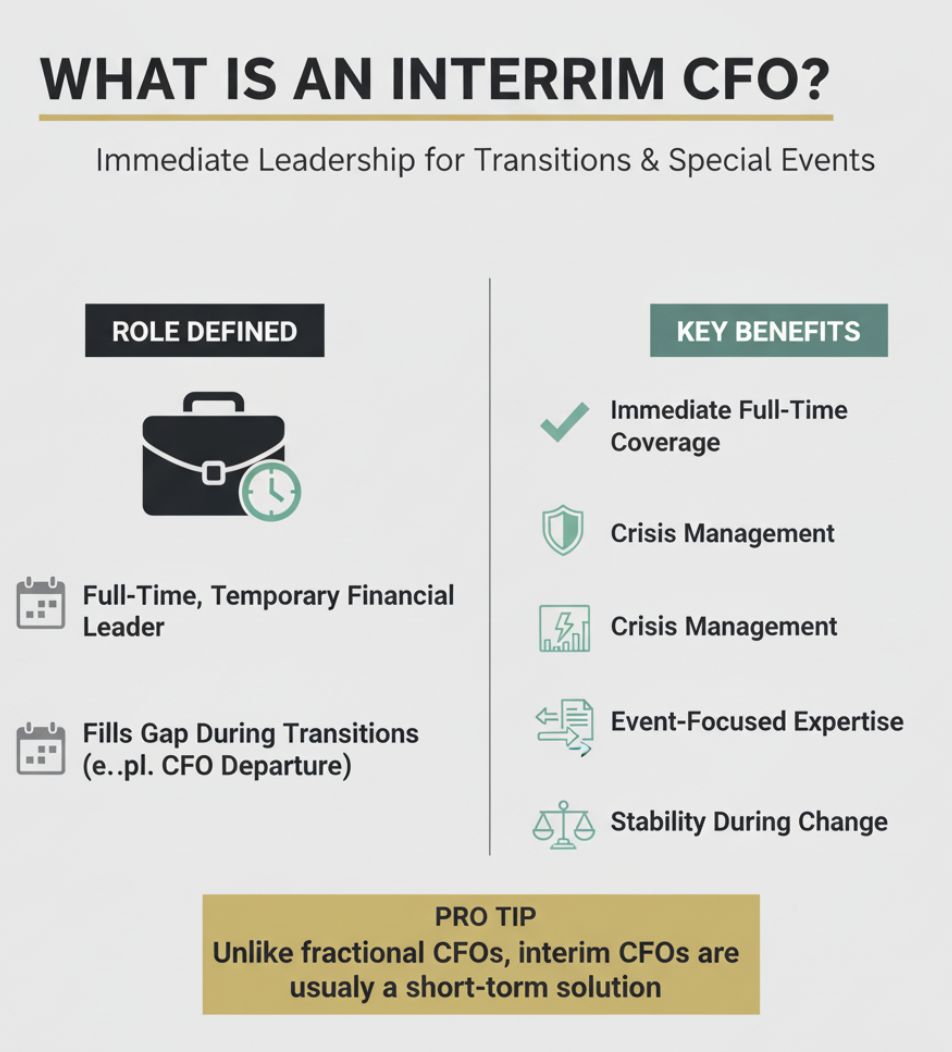
An interim CFO is a full-time, temporary financial leader brought in to fill a gap during transitions. Businesses typically hire interim CFOs when their previous CFO has left, or when preparing for a major event such as an acquisition, IPO, or restructuring.
Key Benefits of an Interim CFO
- Immediate full-time coverage: Keeps leadership steady during transitions.
- Crisis management: Provides urgent expertise in times of financial uncertainty.
- Event-focused expertise: Ideal for mergers, acquisitions, or audits.
- Stability during change: Maintains investor and board confidence.
Unlike fractional CFOs, interim CFOs are usually a short-term solution. Once a permanent hire is made or the business stabilizes, the interim role concludes.
Fractional CFO vs Interim CFO: A Side-by-Side Comparison
| Feature | Fractional CFO | Interim CFO |
|---|---|---|
| Engagement | Part-time, ongoing | Full-time, temporary |
| Best For | Long-term guidance & scaling | Transitional or crisis situations |
| Cost | Flexible, pay-as-you-go | Higher (full-time commitment) |
| Focus | Strategic growth, financial planning | Stability, urgent needs |
| Duration | Months to years | Weeks to months |
This comparison makes it clear: the choice depends on whether you need sustainable, ongoing expertise or intensive, short-term leadership.
How to Choose: Fractional CFO vs Interim CFO
Here’s a simple decision framework:
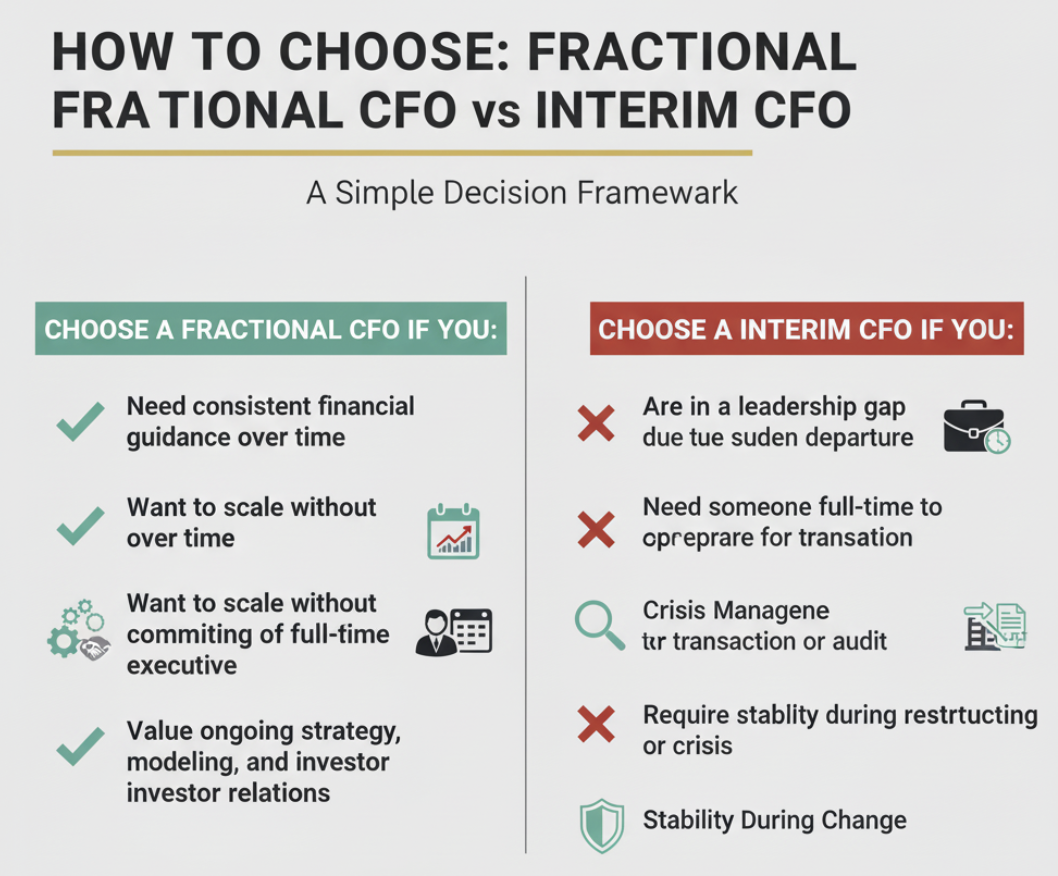
- Choose a fractional CFO if you:
- Need consistent financial guidance over time.
- Want to scale without committing to a full-time executive.
- Value ongoing strategy, modeling, and investor relations.
- Choose an interim CFO if you:
- Are in a leadership gap due to sudden departure.
- Need someone full-time to prepare for a transaction or audit.
- Require stability during restructuring or crisis.
For example, if your startup is scaling into new markets, a fractional CFO can guide growth sustainably. But if your long-term CFO resigned right before a funding round, an interim CFO ensures continuity and confidence with investors.
Leveraging Tools & Frameworks for Smarter Financial Leadership
The right CFO—fractional or interim—can unlock efficiency and growth. Today, many executives also leverage AI-powered tools and strategic checklists to maximize impact:
- Use the 90-Day Success Checklist to standardize early wins.
- Explore advanced prompt engineering frameworks for financial analysis and reporting.
- Access curated resources like the AI Advantage ebook to integrate smarter workflows into your operations.
These tools complement leadership decisions, helping businesses run leaner and smarter.
FAQs About Fractional CFOs vs Interim CFOs
1. What’s the main difference between a fractional CFO vs interim CFO?
A fractional CFO works part-time, usually long-term, while an interim CFO steps in full-time temporarily during transitions.
2. Are fractional CFOs cheaper than interim CFOs?
Yes. Fractional CFOs are generally more cost-effective since you pay only for part-time support. Interim CFOs, however, require full-time compensation.
3. Can a fractional CFO become a full-time hire?
In some cases, yes. Many companies use fractional roles as a bridge to permanent positions once they scale.
4. When should I hire an interim CFO?
You should consider an interim CFO if your current CFO leaves unexpectedly or when preparing for a high-stakes event like an acquisition or IPO.
5. Which option is better for startups?
Startups often benefit more from fractional CFOs, as they provide long-term guidance without the cost of a full-time executive.
Final Thoughts
Choosing between a fractional CFO vs interim CFO depends on your business’s stage and challenges. Fractional CFOs bring sustainable, part-time expertise that grows with you. Interim CFOs bring immediate stability in high-stakes transitions. Both are powerful options when full-time leadership isn’t the right fit.
If you’re ready to explore flexible executive talent, NeoGig makes it simple to engage the right leader—fractional, interim, or even project-based—to meet your exact needs.