
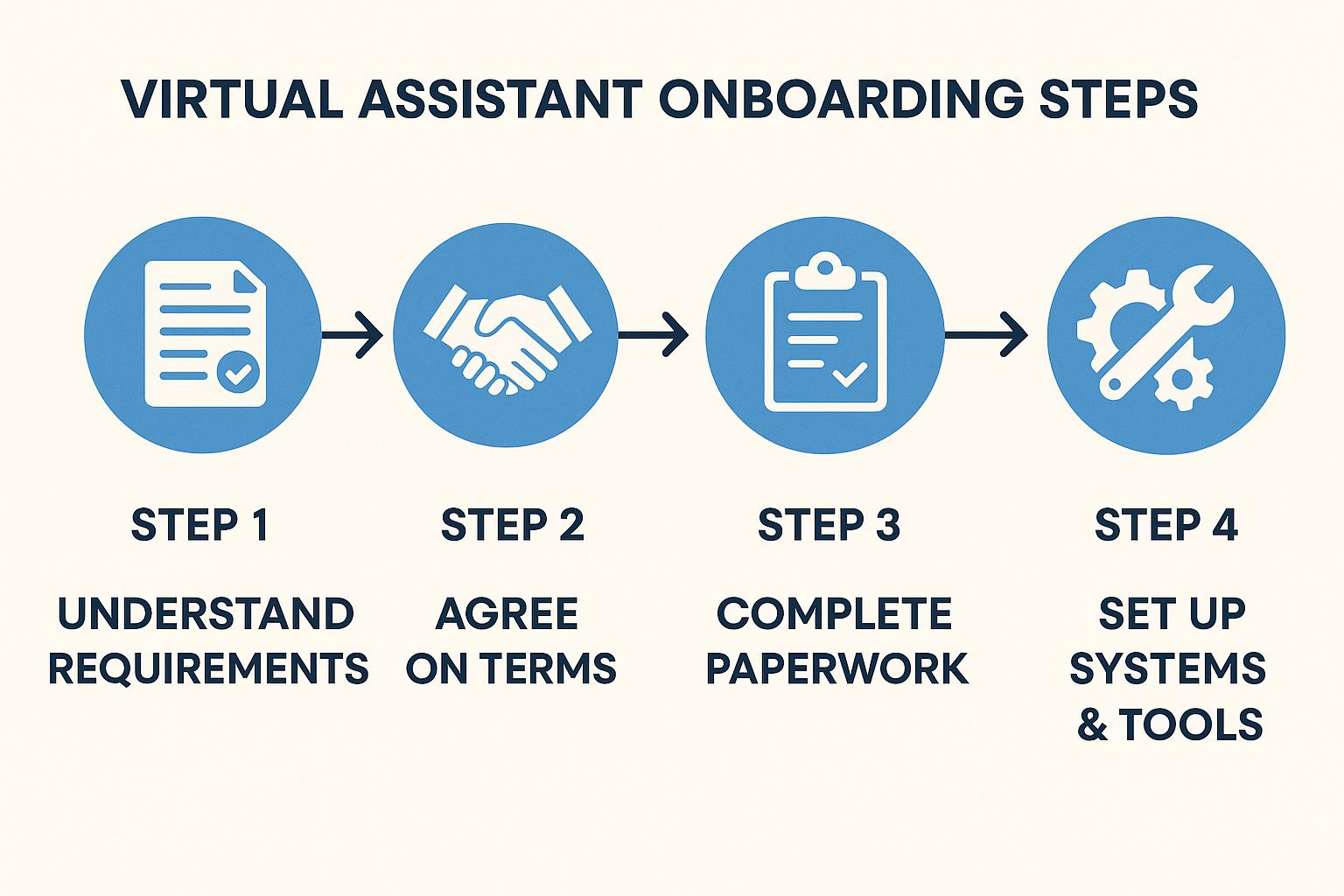
Top 5 Virtual Assistant Onboarding Steps for a Smooth Start
Meta Description: A sequential onboarding process to get VAs productive fast.
Bringing a new virtual assistant (VA) on board is a pivotal moment for any growing business. But without a well-defined onboarding process, even the most talented VA can struggle to meet your expectations. Whether you’re a founder, operator, or HR leader, understanding the essential virtual assistant onboarding steps will set the stage for productivity, trust, and long-term success.
Why VA Onboarding Matters for Modern Teams
Improper or rushed onboarding is a leading cause of miscommunication and turnover—especially in remote and fractional teams. As businesses increasingly choose between hiring virtual assistants, fractional executives, or full-time staff, a clear onboarding framework is essential for scaling operations efficiently. Learn more about choosing fractional vs. full-time leadership here.
Top 5 Virtual Assistant Onboarding Steps
Define Roles and Set Clear Expectations
- Document daily, weekly, and monthly tasks
- Clarify performance metrics and reporting structure
- Share your communication preferences (tools, cadence, response times)
Tip: Use a template or checklist to ensure nothing is missed. For complex roles, consider a kickoff call to align on priorities.
Prepare Essential Tools and Access
- Set up email accounts, project management access, and file sharing permissions
- Provide training materials or SOPs for key platforms
- Ensure cybersecurity measures are in place (CISA Telework Cybersecurity Tips)
Proactive setup avoids costly delays and security risks.
Introduce Company Culture and Team
- Share your company mission, values, and vision
- Arrange virtual introductions with key team members
- Invite your VA to team meetings or channels
This helps your VA feel included and aligned with your business goals.
Outline Workflows and Feedback Loops
- Walk through core processes (e.g., task submission, approvals, reporting)
- Set up regular check-ins for feedback and questions
- Use collaborative tools to track progress and share updates
Establishing structure early prevents missteps and builds autonomy.
Monitor Progress and Adjust as Needed
- Set 30/60/90-day goals with clear deliverables
- Provide ongoing feedback and celebrate early wins
- Adjust responsibilities as your VA grows more confident
Iterative improvement is key to getting the most from your VA investment.
For more onboarding templates and process optimization tips, explore our Your Neo Gig resources.
FAQ: Virtual Assistant Onboarding Steps
What is the most important step in onboarding a virtual assistant?
Defining roles and expectations is foundational. Clear direction helps VAs deliver results faster and reduces the risk of miscommunication.
How long should the onboarding process take?
A structured onboarding typically lasts 2-4 weeks, but check-ins and support should continue as the VA acclimates to your business.
Which tools are best for managing VA onboarding?
Popular tools include project management platforms (like Asana or Trello), secure password managers, and communication apps such as Slack or Microsoft Teams. See more VA tools here.
Should onboarding differ for fractional vs. full-time hires?
Yes. Fractional hires (including VAs and executives) benefit from concise, goal-oriented onboarding focused on immediate impact, as discussed in our fractional leadership onboarding guide.
How do I measure onboarding success?
Track progress against initial goals, gather feedback from both the VA and team, and assess early deliverables for quality and timeliness.
Ready to Scale with the Right Talent?
Whether you’re onboarding your first VA or building a flexible leadership team, a thoughtful process unlocks real results. If you’re interested in vetted fractional talent—from virtual assistants to C-suite executives—explore Your Neo Gig and discover how we support your growth journey.