
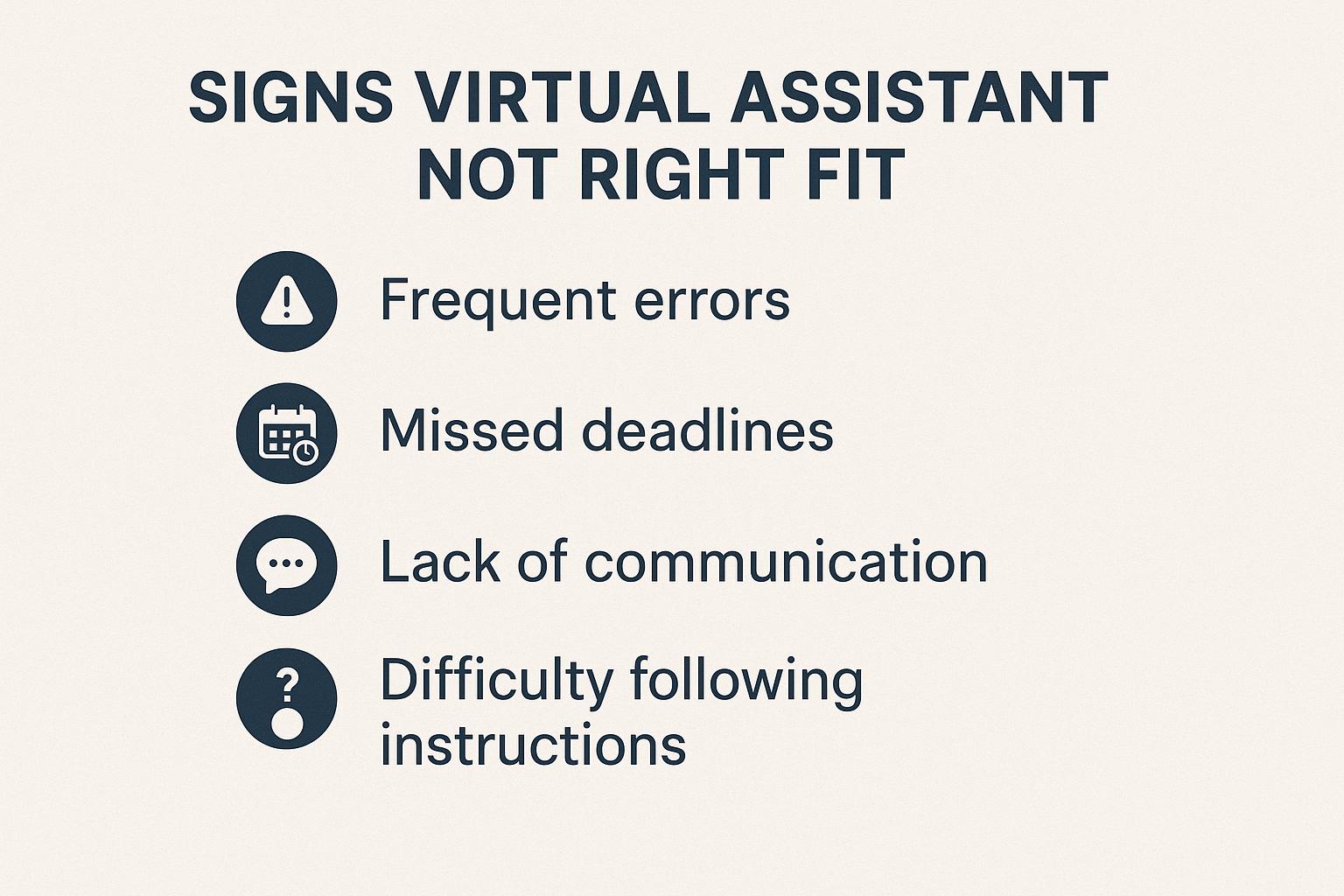
5 Signs Your Virtual Assistant Isn’t the Right Fit
In fast-moving startups and small businesses, virtual assistants (VAs) can be a game-changer—if you have the right one. But what happens when the fit just isn’t there? For founders and operators juggling multiple priorities, a misaligned VA can cost more than just time and money—it can slow your momentum. Spotting the signs a virtual assistant is not the right fit early can save you from headaches down the line.
Why VA Fit Matters in Scalable Operations
Whether you’re building your team or considering fractional leadership, having the right support at every level is crucial. A great VA can take routine tasks off your plate and help you focus on growth. But when the fit is off, you risk workflow bottlenecks, missed deadlines, and growing frustration.
5 Key Signs Your Virtual Assistant Isn’t the Right Fit
- Poor Communication and Follow-Through
Effective VAs proactively update you, ask clarifying questions, and confirm priorities. If you’re constantly chasing updates, or instructions get lost in translation, it’s a red flag. - Frequent Missed Deadlines
Occasional hiccups happen, but a pattern of missed or delayed tasks signals bigger issues—like lack of organization or engagement. - Inability to Adapt or Take Initiative
Growing businesses change fast. If your VA struggles to adapt to new systems, or rarely suggests improvements, you might be outgrowing their skill set. - Reliance on Micromanagement
If you find yourself micromanaging every step, the relationship is costing you more time than it saves. The right VA should handle tasks with minimal oversight. - Misalignment with Your Company Culture
Even virtual team members shape your business’s tone and workflow. If your VA’s work style or communication doesn’t mesh with your values, it can impact morale and client relationships.
Framework: Evaluating VA Fit
- Performance Reviews: Set clear KPIs and review progress monthly.
- Feedback Loops: Encourage two-way feedback to surface issues early.
- Trial Projects: Start with a short-term project before making a long-term commitment.
As your operations scale, consider whether your business needs have outgrown the VA model. Sometimes, what you really need is a fractional executive—someone who brings strategic expertise beyond task management. Your Neo Gig helps founders match with vetted fractional leaders who can step in and drive results.
FAQ: Virtual Assistant Fit & Fractional Talent
- How do I know if my VA is underperforming or just needs more onboarding?
- Compare their output to your expectations and similar roles. If issues persist after extra training and clear SOPs, it may be a fit issue.
- When should I replace a VA versus coach them?
- If problems are skill-based or due to lack of effort, replacement makes sense. If issues stem from unclear processes, coaching may help.
- What’s the difference between a VA and a fractional executive?
- VAs handle administrative tasks. Fractional executives (like CFOs, CMOs) provide strategic leadership and can transform your operations. Learn more about the difference.
- How can I improve the onboarding process for remote team members?
- Create clear documentation, set expectations early, and use regular check-ins. Tools like these onboarding best practices can help.
- What are the first steps to hiring a fractional leader?
- Assess your current pain points, define the outcomes you want, and consult with platforms like Your Neo Gig to find the right match.
Ready to Level Up Your Team?
If you’re seeing these signs a virtual assistant is not the right fit, it may be time to rethink your hiring strategy. Explore how fractional talent from Your Neo Gig can help you scale smarter—no hard selling, just real expertise when you need it.